EN
EN



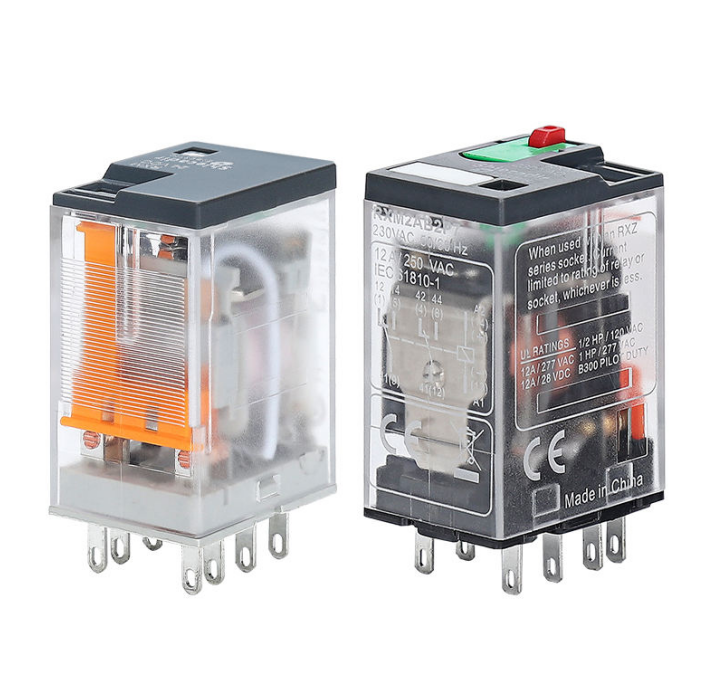
Understanding the Working Principle of Intermediate Relays
How Intermediate Relays Translate Low-Power Control Signals
The core mechanism involves an electromagnetic coil and movable contacts. When a PLC sends a 12-24V DC signal to the relay coil, it generates a magnetic field that pulls a spring-loaded armature, closing or opening the load circuit contacts. Key specifications include:
| Parameter | Control Circuit Range | Load Circuit Range |
|---|---|---|
| Voltage | 12-24V DC | 24-480V AC/DC |
| Current | 10-50mA | 2-10A |
| Response Time | 3-15ms | N/A |
For example, modern relays can amplify a 24V PLC output to safely switch three-phase 20A motor circuits while maintaining <10ms response latency.
Case Study: Signal Activation in a Motor Control Center
A Midwest automotive plant reduced motor starter failures by 47% (2022 data) after implementing intermediate relays between PLCs and 50HP conveyor motors. The relays eliminated voltage transients from motor inrush currents that previously damaged PLC output cards, while enabling parallel control of multiple contactors through shared logic signals.
Selecting Coils and Contacts Based on Load Requirements
Match relay specifications to operational demands:
- Coil voltage (12/24/48V DC/AC) must align with control system output
- Contact material (AgNi for resistive loads, AgSnO₂ for inductive)
- Contact configuration (1NO/1NC for simple switching, 4NO/4NC for multi-circuit control)
- Load type (resistive, inductive, capacitive) determines derating factors
Trend: Miniaturization and Efficiency in Modern Intermediate Relay Design
Recent advancements include 22mm DIN-rail modules (-60% size vs. legacy models) with energy-saving coils (0.9W holding power, -75% vs. traditional designs) and solid-state options for high-speed switching (1M cycles @ 0.5Hz). However, as industry analyses show, mechanical relays still dominate 83% of high-current (>5A) applications due to superior overload tolerance.
Risks of Direct Connection Between Control and Power Circuits
When control systems get connected directly to power circuits, it opens up problems like ground loops, those nasty voltage spikes, and electromagnetic interference we all know as EMI. According to research published by Ponemon back in 2023, nearly half of all industrial control system breakdowns actually come down to this kind of interference. Take a look at what happens during regular operation of big motors. These machines can throw off wild voltage surges sometimes hitting over 300 volts right into those unprotected low-voltage PLC input ports. The result? Messed up sensor readings and plenty of false alarm situations that nobody wants to deal with on the factory floor.
Achieving Voltage and Current Isolation Using Intermediate Relays
Intermediate relays create what's called galvanic isolation, basically keeping those low voltage control signals (around 24V DC) completely separate from the much higher power circuits running at 480V AC. They do this using magnetic coupling between coils and contacts rather than direct electrical connections. What this means is no shared ground paths get created, which helps prevent dangerous current loops while still allowing signals to pass safely across different parts of the system. According to testing done last year by Interference Technology, these relay systems cut down on transient noise problems by almost 92% when compared to traditional optocouplers, especially important in industrial settings where machinery vibrations can cause all sorts of interference issues.
Case Study: Eliminating Noise in Sump Pump Control Systems
A wastewater plant resolved persistent false triggering in its sump pump controls by installing intermediate relays between PLC outputs and motor starters. The relays blocked EMI from variable-frequency drives, reducing downtime by 78% and extending contactor lifespan by 3.2Ð (16-month operational review).
Growing Demand for Galvanic Isolation in Industrial Automation
With industrial IoT adoption rising 34% annually since 2021 (MarketsandMarkets), manufacturers increasingly prioritize isolation to protect networked sensors and edge controllers. Intermediate relays offer a cost-effective alternative to digital isolators in harsh environments like mining conveyors and oil refinery valve arrays.
Strategy: Protecting Sensitive PLCs with Relay-Based Isolation
A tiered isolation approach using intermediate relays ensures PLC outputs never directly interface with inductive loads. This buffers control systems from arc flash risks while enabling modular maintenance—a critical advantage over integrated solid-state relays.
Signal Amplification and Voltage Level Shifting for System Compatibility
Addressing Mismatches Between Sensor Outputs and Actuator Inputs
Modern control systems often face voltage incompatibility, where low-power sensor signals (3—24V DC) must interface with actuators requiring 120—480V AC. A 2023 IEEE study found 63% of industrial control failures stem from voltage mismatches. Intermediate relays solve this by acting as adaptive interfaces, bridging the gap between delicate control components and high-power loads.How Intermediate Relays Enable Reliable Signal Amplification
By using electromagnetic coil activation, intermediate relays amplify control signals through isolated contact closure. For example, a 5V PLC output can trigger a relay coil to switch a 30A motor circuit—providing 600x current amplification while maintaining electrical isolation. This prevents back-electromotive force from damaging sensitive controllers.Case Study: Connecting PLCs to High-Power Lighting Systems
A leading industrial facility reduced lighting control failures by 78% after implementing intermediate relays. The relays converted 24V PLC signals to 277V outputs, enabling safe control of 400kW lighting loads without modifying existing automation infrastructure. This solution maintained compatibility across legacy and modern control layers.Intermediate Relays in Smart Building Management Applications
In intelligent HVAC systems, intermediate relays enable seamless integration of IoT sensors (typically 12—48V DC) with 3-phase 480V air handling units. This voltage translation supports centralized building automation while preventing electromagnetic interference across subsystems.Matching Relay Specifications to System Voltage Requirements
Key selection criteria include:- Coil voltage compatibility (±10% of control signal)
- Contact current rating (125—150% of continuous load)
- Dielectric strength (2x system voltage + 1,000V)
Enabling Logical Control and Safe Circuit Sequencing
Managing Complexity in Multi-Stage Industrial Processes
Intermediate relays simplify control logic in systems requiring sequential operations, such as conveyor belt synchronization or chemical batch processing. By breaking down complex workflows into isolated relay-controlled stages, engineers prevent cascading failures—a critical advantage in industries where 43% of unplanned downtime stems from control circuit errors (Automation World, 2023).
Implementing Boolean Logic with Intermediate Relays in Control Panels
These devices execute AND/OR/NOT operations by strategically wiring normally open (NO) and normally closed (NC) contacts. For instance, a safety interlock might require both temperature and pressure thresholds before activating a pump, a task achieved without programmable logic controller (PLC) complexity.
Case Study: Interlocking Mechanisms in Motor Control Centers
A food packaging plant eliminated cross-startup risks in its mixer motors using intermediate relays with mechanical interlocks. This relay-based design ensured only one motor could energize simultaneously, reducing arc flash incidents by 67% compared to previous PLC-only configurations.
Relays vs. PLCs: Choosing the Right Solution for Simple Logic Tasks
While PLCs handle advanced algorithms, intermediate relays offer superior reliability for basic logic at 30-50% lower lifecycle costs. Maintenance data shows relay-controlled sequencing tasks require 72% fewer troubleshooting hours than equivalent PLC implementations in HVAC control applications.
Improving System Reliability Through Control and Power Circuit Separation
Failure Propagation Risks in Non-Isolated Electrical Systems
When control systems and power circuits run through the same paths, problems tend to snowball quickly into major system failures. Recent research on power grid reliability from last year found something pretty alarming actually: around 43 percent of all unexpected power cuts were caused by electromagnetic interference happening between those big current carrying power lines and the tiny voltage control signals running alongside them. That's where intermediate relays come in handy. These devices create physical separation between different circuit types, which acts as protection against dangerous voltage surges and pesky ground loop issues that can really mess up delicate equipment such as programmable logic controllers (PLCs). Most electricians will tell you this isolation is absolutely essential for keeping industrial systems running smoothly without constant interruptions.
Enhancing Safety and Uptime with Functional Circuit Separation
Today's protection coordination methods focus on keeping control signals separate from actuator power through the use of intermediate relays. According to NFPA 70E data from 2022, this separation cut down arc flash occurrences by around two thirds in manufacturing plants. Maintenance teams can now work on control panels much safer without having to shut down whole production lines for troubleshooting. Another benefit worth mentioning is how this setup actually makes equipment last longer. When voltages don't mix improperly, it stops those annoying coil vibrations and wears on contacts that eventually lead to failures. Plants adopting this strategy report fewer unexpected breakdowns over time.
Case Study: Reducing Downtime in Manufacturing Lines with Relay Buffering
One major automotive manufacturing facility hit nearly 99.4% uptime on their production lines once they upgraded 1,200 control panels with intermediate relays across the plant floor. Before this fix, problems with PLC modules failing during conveyor motor surges were causing about 12 hours of downtime every month throughout the factory. These unexpected outages really disrupted operations and cost money in lost productivity. The new relay buffer system actually limited where faults could occur, so instead of entire sections going down, only small areas needed attention. This change reduced emergency repair calls by around three quarters according to maintenance records. For plants running 24/7 where every minute counts, this kind of improvement makes all the difference when it comes to keeping production costs under control while maintaining output levels.
Designing Fault-Tolerant Architectures Using Intermediate Relays
Top equipment makers have started incorporating dual redundant relay contacts along with coil monitoring systems in their critical safety applications lately. These kinds of backup setups actually comply with IEC 62443 guidelines for securing industrial networks because they keep those pesky control circuits separate. That separation stops malicious software from causing sudden power spikes that might damage important components downstream. And there's something else going on too real time diagnostics for relays really boost system dependability. Some smart maintenance programs can even detect when contacts are starting to wear out way ahead of time sometimes as much as two months before things would normally break down according to testing protocols. This early warning gives plant managers plenty of lead time to schedule repairs without disrupting operations.
FAQ Section
What is the role of intermediate relays in industrial control systems?
Intermediate relays act as signal mediators between low-power control circuits and high-power load circuits, ensuring voltage and current levels are matched and providing necessary electrical isolation.
How do intermediate relays prevent interference issues?
Intermediate relays use galvanic isolation to separate control signals from power circuits, greatly reducing transient noise and preventing electromagnetic interference problems.
Why are intermediate relays used in complex control processes?
They simplify control logic by enabling sequential operations, reducing the risk of cascading failures in multi-stage systems.
What are the benefits of using relay-based isolation?
Relay-based isolation buffers control systems from risks like arc flash, enhances system reliability, and allows for safer and more modular maintenance.
Table of Contents
- Understanding the Working Principle of Intermediate Relays
- Risks of Direct Connection Between Control and Power Circuits
-
Signal Amplification and Voltage Level Shifting for System Compatibility
- Addressing Mismatches Between Sensor Outputs and Actuator Inputs
- How Intermediate Relays Enable Reliable Signal Amplification
- Case Study: Connecting PLCs to High-Power Lighting Systems
- Intermediate Relays in Smart Building Management Applications
- Matching Relay Specifications to System Voltage Requirements
- Enabling Logical Control and Safe Circuit Sequencing
- Improving System Reliability Through Control and Power Circuit Separation
- FAQ Section