EN
EN



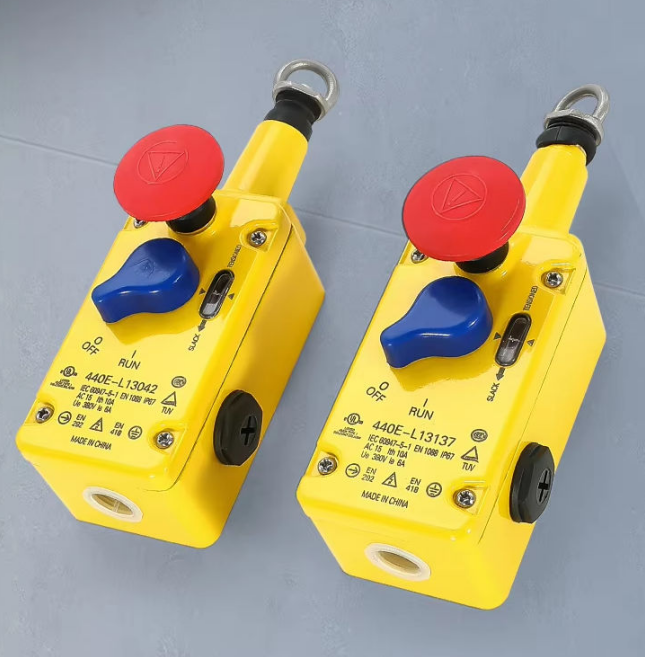
Core Components of a Pull Rope Emergency Stop Switch System
Anchor Points and Their Role in System Integrity
The anchor points serve as the basic structural support for emergency stop systems, attaching cables securely to walls, frames or whatever fixed structures happen to be available. These components are built to handle forces well beyond 10 kN according to research from Ponemon in 2023, which means they hold up pretty well when things come to a sudden halt. When dealing with cable runs longer than about 100 meters though, most experts suggest going with two anchor points instead of just one. This setup helps keep the tension consistent throughout the whole run while putting less strain on each individual anchor point, something that makes sense if we want our safety systems to actually work when needed.
Cable, Clamps, and Pulleys: Ensuring Continuous Activation Path
Corrosion-resistant stainless steel cables, paired with galvanized clamps and pulleys, create a fail-safe activation path. Clamps prevent slippage at termination points, while pulleys minimize friction during cable movement. NEMA 4X-rated components ensure reliable performance in harsh environments–resisting dust, moisture, and extreme temperatures without compromising conductivity.
Switch Mechanisms and Integration with Safety Circuits
Activation triggers immediate circuit interruption via latching switches monitored by PLCs or safety relays. These mechanisms comply with the IEC 60947-5-5 standard, incorporating mechanical latching for international compliance. Redundant contacts provide backup signaling, ensuring machinery halts within 500 ms of deployment.
Tensioning Devices: Spring-Loaded Tensioners and Turnbuckles
Spring-loaded tensioners automatically compensate for cable elongation, maintaining 50–150 N of baseline tension to prevent slack. Turnbuckles allow manual fine-tuning in ±5 N increments, essential for aligning multi-switch systems. Built-in over-tensioning safeguards protect components in high-vibration settings while preserving tactile feedback.
Guides, Markers, and Mounting Hardware for Optimal Alignment
Fluorescent markers spaced no more than 3 meters apart enhance visibility, while UV-stable polymer guides route cables away from pinch points. Adjustable mounting brackets support ±15° angular corrections, enabling straight-line routing around obstructions. Chromate-plated fasteners resist loosening under repeated use, maintaining alignment across 100,000+ activation cycles.
Critical Cable and Environmental Performance Requirements
Material Strength and Breaking Load Specifications
Emergency stop cables must meet stringent mechanical benchmarks. ISO 13850 requires a minimum breaking load of 1,500 lbs (680 kg), ensuring reliable activation under high tension. Multi-strand stainless steel wire ropes commonly exceed ISO 14118:2018 requirements with yield strengths up to 80,000 psi, combining flexibility and durability.
Jacket Material and Environmental Resistance (NEMA/IP Ratings)
Outdoor gear needs protection against UV damage and chemicals getting through. That's why manufacturers often go with polyurethane (PUR) or thermoset rubber coatings when they need those tough IP67 or NEMA 4X standards. These materials work well across extreme temperatures ranging from minus 40 degrees Celsius all the way up to 90 degrees. Tests show that PUR coated wires still keep about 95% of their flexibility even after being bent over 10,000 times in salty environments. And for places where there's constant high pressure washing, the IP69K rated versions cut down on failures by around two thirds compared to standard options.
Color Coding and Visibility Standards for Emergency Identification
High-contrast colors such as safety red (RAL 3001) or fluorescent yellow (ISO 3864-1) enable rapid identification. ANSI Z535.1-2022 mandates retroreflective striping achieving 250 cd/lux/m² reflectivity at 30 meters. Dual-color markers every 10 meters fulfill IEC 60204-1’s “stop function conspicuity†requirement, enhancing recognition along extended runs.
Robustness Against Dust, Moisture, and Mechanical Wear
Halogen-free jackets withstand 500+ hours of abrasive wear (ASTM D4060) while maintaining dielectric performance in humid environments. Cross-linked polyethylene (XLPE) insulation prevents current leakage at 90% relative humidity, outperforming PVC by a 3:1 margin in damp-heat cycling tests. Field data show epoxy-coated tensioners reduce corrosion-related maintenance by 78% compared to zinc-plated alternatives.
Key Compliance Metrics
| Property | Industrial Standard | Minimum Requirement |
|---|---|---|
| Tensile Strength | ISO 14118:2018 | 1,200 lbs breaking load |
| UV Resistance | UL 1581 | 1,000-hour xenon arc test |
| Temperature Range | IEC 60068-2-14 | -40°C to 105°C operational |
| Reflectivity | ISO 3864-1 | 250 cd/lux/m² @ 30 meters |
This matrix ensures adherence to global safety directives while addressing environmental challenges in industrial settings.
Fail-Safe Design and Safety Mechanisms in Pull Cord Systems
Modern pull rope emergency stop switch systems employ fail-safe engineering to guarantee machine shutdown during equipment malfunctions or operator intervention. Designed to meet IEC 60947-5-5 directives, they incorporate redundancy, automatic fault detection, and predictable failure modes.
Latching Mechanism and Automatic Locking Upon Activation
Spring-loaded latches engage instantly when the cord is pulled, mechanically locking the switch in the “tripped†position until manually reset. This prevents accidental restarts due to vibration or partial tension recovery.
Activation on Pull or Break: Ensuring Response to Any Failure Mode
Dual-response systems trigger shutdowns whether the cord is intentionally pulled or severed by impact. A 2023 machinery safety audit found that 98% of such systems met ISO 13849-1 Performance Level d (PLd) requirements.
Tripping Force Calibration for Human Factors and Accessibility
The disengagement force is calibrated between 70-120 Newtons, achieving a balance between fast response and ergonomic accessibility. The research of ANSI B11.19-2023 shows that forces below 150N are suitable for 95% of users, including those with limited mobility.
Manual Reset Protocols to Prevent Accidental Restart
According to OSHA 1910.147 (c) (4) lockout/tagout standards, resetting requires thoughtful action, such as using a key switch or dual handle mechanism. This ensures intentional verification before the recovery operation.
Tension Management and Slack Detection for System Reliability
Spring-Loaded and Counterweight Tensioning Solutions
Effective tensioning maintains consistent cable tautness despite temperature shifts and mechanical wear. Spring-loaded tensioners adjust for minor elongation (±5% per ISO 13857), while counterweights apply gravitational force in vertical runs. Both methods prevent false trips and ensure activation precision within 1.1 mm.
Tension Indicators and Visual Monitoring Tools
Modern systems feature color-coded displacement markers or digital strain gauges for real-time monitoring. Installations with live tension displays reduce maintenance errors by 38% compared to manual checks. Data logging enables predictive analysis, identifying wear trends before component failure.
Slack Detection as a Tamper-Resistant Safety Feature
If the tension drops below 15N, the redundant slack detection switch will activate the emergency circuit, which is a threshold designed to prevent intentional bypass attempts. This dual protection solves the problems of environmental relaxation and malicious tampering, and complies with the requirements of IEC 60947-5-5.
Passive vs. Active Slack Monitoring: Resolving the Debate
| Monitoring Type | Response Time | Maintenance Needs | Compliance Fit |
|---|---|---|---|
| Passive (mechanical) | <200 ms | Quarterly inspections | ISO 12100 |
| Active (sensor-based) | <50 ms | Real-time diagnostics | IEC 62061 |
| Passive systems dominate hazardous environments (used in 92% of chemical plants), while active monitoring is growing in robotics-heavy facilities requiring instant response. |
Ergonomic Installation and Compliance Best Practices
Optimal Mounting Height and Reach for Operator Access
Install the pull rope emergency stop switch between 32-48 inches above the surface of the aisle to provide ergonomic service to 95% of operators. This height minimizes the risk of exceeding limits and ensures that the handle is clearly visible in emergency situations.
High-Contrast Colors, Flags, and Handles for Rapid Recognition
Fluorescent orange or yellow jackets with retroreflective strips improve detectability in low-light areas. Contrast ratios exceeding 70:1 against background surfaces cut activation delays by 1.2 seconds (ISO 3864-1:2024), accelerating emergency response.
Installation Along Walkways and Hazard Zones for Maximum Coverage
Position cables within 10 feet of potential hazards like conveyor nip points. ASME B20.1-2023 requires dual-directional activation capability for linear machinery longer than 50 feet, ensuring accessible control from either end.
Alignment with IEC, ANSI, ISO, and ASME B20.1 Safety Directives
A certified system must be able to withstand a static tension of 40 pounds without false triggering, and have a deflection of 2 inches per 50 feet. A 2024 industrial safety analysis found that installations that comply with ISO 13850 standards reduced equipment damage claims by 29% compared to unverified designs.
Documentation and Certification for Safety Audits
Maintain records of tension verification, pull-direction testing, and corrosion resistance validation. Annual recertification under NFPA 79:2024 supports ongoing compliance with evolving workplace safety regulations.