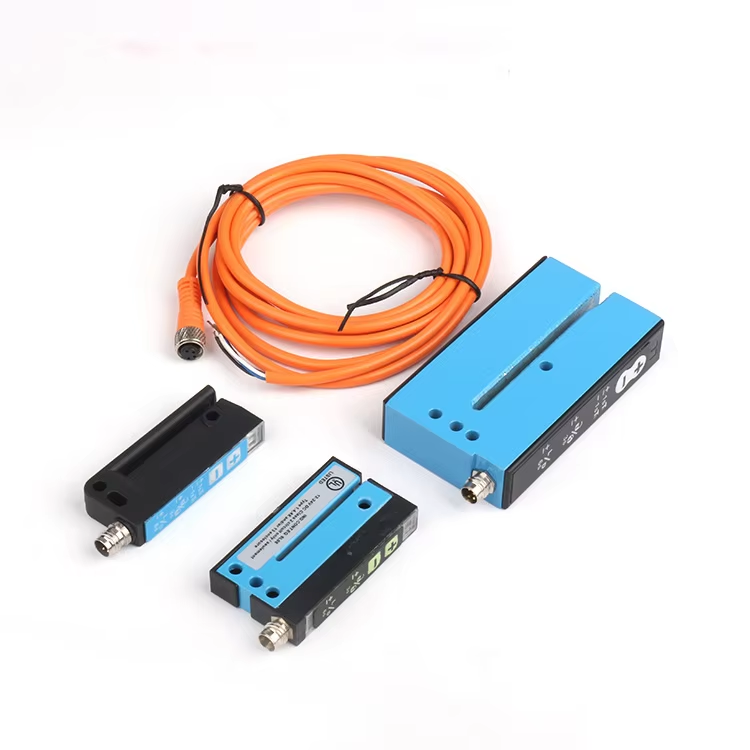
In the demanding environments of aerospace and defense, metal sensors are engineered to perform critical functions including structural health monitoring, component verification, and security screening. These sensors must operate reliably under extreme conditions, such as wide temperature fluctuations, high vibration, and radiation exposure. Eddy-current sensors, for example, are used for non-destructive testing (NDT) to identify surface and sub-surface cracks in aircraft turbine blades and airframe structures, a practice that has been shown to reduce unplanned maintenance events by over 25% according to data from major airline maintenance logs. The aerospace segment of the metal sensor market was valued at approximately USD 950 million in 2023, with Boeing's 2023 Commercial Market Outlook forecasting a steady CAGR of 5.8%, potentially reaching USD 1.4 billion by 2030, driven by increasing aircraft production rates. A notable collaborative event in 2024 involved a leading sensor manufacturer and a space agency developing a new generation of radiation-hardened, lightweight proximity sensors for use in satellite deployment mechanisms and lunar exploration vehicles. The future of aerospace sensing is charting a course towards fully integrated digital twins, where metal sensors provide continuous, real-time data to virtual models of physical assets for predictive maintenance. A study released by the International Air Transport Association (IATA) in 2024 highlighted that 60% of its member airlines have initiated investment programs to install smart sensor networks for continuous component monitoring within the next three years. Concurrently, defense applications for border security and unexploded ordnance detection are witnessing accelerated adoption, with a noted 22% growth in procurement contracts for advanced metallic object detection systems since 2022, reflecting heightened global security priorities.