EN
EN



Understanding Safety Door Switch Compatibility Requirements
Electrical, Mechanical, and Functional Interlock Criteria
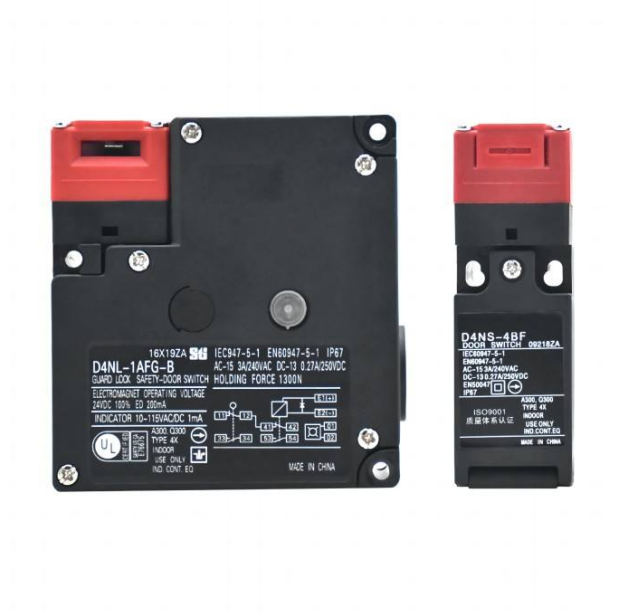
When it comes to safety door switches, there are basically three things that need to work together properly: electrical compatibility, mechanical fit, and functional interlocks. On the electrical side, the switches have to match what the control system needs in terms of voltage (usually either 24 volts DC or 120 volts AC) and handle the right amount of current. They also need built-in safety features so that if something goes wrong like wires coming loose or contacts failing, the system shuts down safely instead of continuing to operate dangerously. Mechanically speaking, the force needed to activate the switch matters a lot too. Most applications require around 5 Newtons maximum for areas where people might push against the door. The travel distance has to be just right as well to avoid accidental activation or wearing out components faster than they should. From a functional standpoint, we're talking about those physical contact separators that cut power when the door opens. These are required by standards like SIL2 and SIL3 according to IEC 62061 and IEC 61508 regulations. Manufacturers often include extra protection through dual channel systems and weatherproof enclosures rated at IP67 level, which makes them much more reliable in tough industrial settings where dust, moisture, and vibration are common problems.
Key Standards Governing Compatibility (ISO 13857, IEC 60947-5-3, UL 508A)
Global safety standards define the technical and procedural boundaries for safe integration:
- ISO 13857 establishes minimum safety distances to prevent hazardous reach-through during operation
- IEC 60947-5-3 sets performance benchmarks—-including mechanical endurance of —1 million cycles—-and mandates design features like forced-guided contacts
- UL 508A governs North American control panel construction, requiring short-circuit protection, proper conductor sizing, and labeling compliance
| Standard | Scope | Critical Metric |
|---|---|---|
| ISO 13857 | Safety distances | Reach prevention thresholds |
| IEC 60947-5-3 | Durability & design | Mechanical cycle lifetime and contact integrity |
| UL 508A | Panel integration | Short-circuit protection and enclosure compliance |
Third-party certification against these standards is non-negotiable for validation. Failure to comply risks regulatory enforcement actions—-including OSHA penalties exceeding $500,000—-as well as operational stoppages and liability exposure.
Matching Safety Door Switches to Common Industrial Equipment
Conveyors, Robotics, and Presses: Actuator Force, Stroke, and Cycle Timing Considerations
The right switch choice really depends on what kind of equipment we're talking about here. Take conveyors for instance they need switches that can handle pretty decent force, around 50 Newtons or more actually, so they don't pop loose when something bumps into them accidentally. When it comes to robotics though, speed matters most. These systems need response times under 100 milliseconds to keep up with their fast movements and prevent production slowdowns. Presses present another challenge altogether, particularly those heavy duty stamping machines that vibrate constantly. Getting the stroke distance just right becomes super important because if there's not enough travel space, doors might trip unnecessarily due to normal flexing or temperature changes affecting materials. Looking at data from the ANSI B11 Committee in 2023 reveals an interesting point too about why proper specification matching matters so much. Their analysis showed nearly one out of every five guarding failures was actually caused by using switches that didn't match the specific requirements of the machinery. That's why engineers should always validate against actual operating conditions rather than just picking parts based on what looks good in a catalog.
Case Study: Implementation in Automotive Stamping Lines
An automotive Tier 1 supplier eliminated chronic safety door faults in its 800-ton stamping line by replacing mechanical limit switches with magnetically coded, dual-channel safety door switches. Vibration-induced misalignment had previously caused repeated false stops—-averaging 22 unplanned halts per month. The upgraded solution delivered:
- SIL2-compliant redundant contact verification
- 15 mm stroke tolerance accommodating structural flex under load
- IP67-rated stainless-steel housings resistant to oil mist and coolant splash
Downtime fell by 40%, yielding $220,000 in annual productivity gains and eliminating all false trips—-demonstrating how precise environmental and operational alignment enhances both safety integrity and operational continuity.
Non-Contact and Hybrid Safety Door Switch Technologies
RFID and Inductive Sensors in Hazardous or Hygienic Environments
When it comes to harsh environments, non contact tech like RFID tags and those inductive sensors really shine where regular mechanical switches fall short. These systems don't have moving parts that can spark, so they're safe to use in areas classified as ATEX or IECEx zones. They also keep out all sorts of nasties from dust particles to oil splashes and moisture buildup. Plus, they hold up against the harsh chemical cleaning processes needed in food processing plants and pharma labs according to EHEDG standards and NSF/ANSI 169 requirements. The stainless steel casings stay sealed tight even when placed next to noisy equipment such as welding machines or big industrial motors. For temperature sensitive work, inductive sensors keep working accurately through pretty wide temperature ranges without needing constant adjustments. And since they respond in less than 15 milliseconds most of the time, these sensors become essential components in fast paced operations like automated packaging lines, beverage bottling plants, and sterile manufacturing environments.
Avoiding Single-Point Failures: Why Redundancy and Feedback Verification Matter
Getting reliable results from systems where safety matters so much means getting rid of those single points where everything could fail at once. Combining RFID technology with magnetic sensors creates a system that checks itself through two separate channels. The way it works is pretty straightforward actually. If one part stops working properly, the backup kicks in right away to shut things down safely. We've also added PLC logic that constantly compares what's happening with door positions against expected readings. This helps catch all sorts of issues like stuck contacts, when actuators start slipping, or sensors going off track. Throw in some forced guided relays plus ongoing diagnostic checks, and we meet SIL3 standards according to IEC 62061. That basically means our chance of something dangerous failing drops below 0.001 percent each year. And there's another benefit too. Our health monitoring system gives maintenance crews warning signs long before any component reaches its breaking point. They can fix problems proactively instead of waiting until something breaks completely.
Control System Integration for Reliable Safety Door Switch Operation
PLC, Safety Relay, and Fieldbus Compatibility (Pilz, Rockwell, Siemens)
Getting systems to work together smoothly means checking if they can talk to each other at different levels. We're talking about field devices first, then logic controllers, and finally the safety infrastructure components. For switches to do their job right, they need to speak the same language as industry standards like Ethernet/IP, PROFINET, and Profisafe. This allows them to send updates and diagnostics back and forth with safety PLCs made by companies such as Pilz, Rockwell Automation, and Siemens. When it comes to safety relays, making sure everything matches up matters a lot. The coil needs the right voltage and current, and those contacts have to be designed so they don't stick together when they shouldn't. Otherwise bad things happen. Configurable interfaces make life easier during setup. Things like being able to program outputs differently or switch between protocols with firmware help a lot when working with equipment from multiple manufacturers in the same system.
| Compatibility Factor | Verification Method | Impact on Integration |
|---|---|---|
| Voltage/Current Ratings | Cross-check datasheets | Prevents relay dropout or coil burnout |
| Communication Protocol | Test with controller emulator | Ensures deterministic data exchange and fault signaling |
| Environmental Resistance | Validate IP/IEC ingress ratings | Reduces false triggers from contamination or thermal stress |
Field studies show that adherence to IEC 60947-5-3 interface standardization reduces cross-platform integration errors by 47%, accelerating commissioning and improving long-term system stability.
Achieving SIL2/SIL3 Compliance Across the Safety Chain
SIL certification is not assigned to individual components—-but to the entire safety function, from sensor to final element. To achieve SIL2 or SIL3:
- Use dual-channel switches with —90% (SIL2) or —99% (SIL3) diagnostic coverage, validated per IEC 62061 Annex D
- Implement cross-monitored outputs and integrate with certified safety PLCs or relays meeting structural constraints (e.g., Category 3/4 per ISO 13849-1)
- Align safety function response time with the control system—s worst-case scan cycle—-including network latency and diagnostic overhead
SIL3 systems additionally require documented fault exclusions, annual proof testing, and traceable calibration records. Functional safety audits consistently show that installations with end-to-end validation—-spanning risk assessment, component selection, integration, and lifecycle maintenance—-experience 60% fewer safety-related stoppages and significantly lower total cost of ownership.