EN
EN



Micro Limit Switch Size Classes and Critical Dimensional Limits
Subminiature vs. Miniature: Defining IEC/UL Benchmarks for Micro Limit Switch Footprint
The International Electrotechnical Commission (IEC) along with Underwriters Laboratories (UL) set out two main categories when it comes to micro limit switches. Let's start with the smallest ones first. These subminiature versions take up space on a printed circuit board that's equal to or less than 10 square millimeters, and they're pretty narrow too, usually under 5 mm wide. Then we have the miniature options which need a bit more room, ranging somewhere between 12 and 20 square millimeters. For anyone working with these components, following both IEC 61058-1 standards regarding electrical endurance and UL 61058 requirements for safety isolation isn't just recommended but absolutely necessary. This ensures that these tiny switches work reliably even in those low voltage applications below 50 volts, all while fitting into tight spaces where every millimeter counts.
Height, Protrusion, and Clearance: Key Spatial Metrics for PCB-Mounted Micro Limit Switches
Three dimensional parameters govern integration into ultra-compact assemblies:
- Profile height: Subminiature switches typically measure 0.5 mm
- Actuator protrusion: Must extend 1–2 mm beyond the housing to accommodate over-travel without damage
- Lateral clearance: Minimum 0.3 mm spacing is required per UL 508 to support thermal management
| Metric | Subminiature Range | Miniature Range | Critical Standard |
|---|---|---|---|
| PCB footprint (mm²) | ≤10 | 12–20 | IEC 60617 |
| Operating force (g) | 20–50 | 50–100 | UL 61058 |
| Actuator travel | ≤0.3mm | ≤0.6mm | ISO 13849-1 |
Exceeding these limits reduces service life by up to 70% in high-vibration applications, as confirmed by 2024 component reliability testing across industrial and medical platforms.
How Space Constraints Directly Impact Micro Limit Switch Performance
Space restrictions reshape micro limit switch behavior—introducing non-linear trade-offs between mechanical travel, actuation force, and long-term reliability.
Operating Force and Travel Trade-offs in Gaps Under 3mm
When there's only about 3 mm or less space inside an enclosure, shorter actuator movement actually means the operator has to apply more force to get it working. Most regular micro switches need less than 10 grams of force to activate according to industry standards from last year. But if we squeeze that travel distance down under half a millimeter, something interesting happens - the sensitivity goes way up, around 70% higher in fact. That makes accurate calibration absolutely essential. Think about devices where mistakes really matter, such as those single use medical injection tools or the folding mechanisms on modern gadgets. A simple accidental trigger in these situations could seriously affect how well they work or even put someone's safety at risk.
| Spatial Constraint | Operating Force | Permissible Travel | Design Impact |
|---|---|---|---|
| >3mm gap | <10gf | 0.75–1.5mm | Standard calibration |
| 1–3mm gap | 10–25gf | 0.3–0.7mm | Requires mechanical dampening |
| <1mm gap | >25gf | <0.3mm | Elevated risk of premature failure |
Actuator Geometry Selection: Lever, Plunger, and Roller Types for Tight Enclosures
Actuator geometry determines fit and functional robustness in constrained layouts:
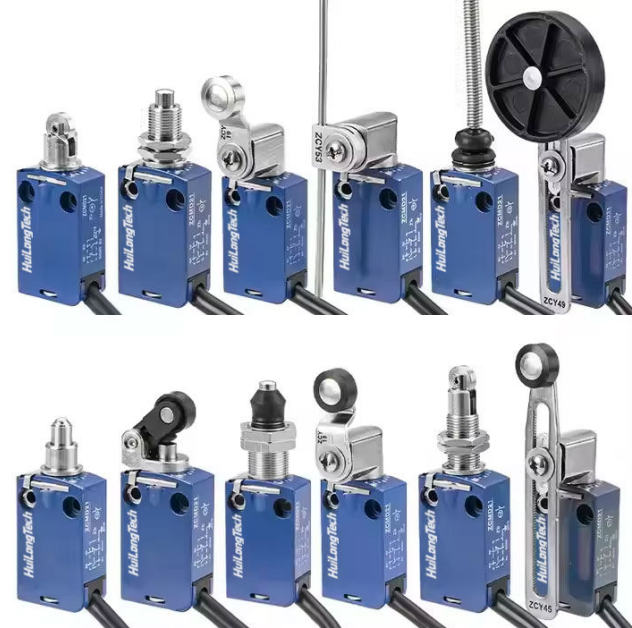
- Roller levers require rotational clearance but tolerate up to 0.8 mm alignment misalignment
- Plungers suit linear spaces under 1.5 mm height but demand near-perpendicular engagement
- Modified levers with 45° bends resolve offset challenges—common in wearable battery compartments where vertical space is scarce
Plunger-type actuators dominate sub-8 mm medical devices (82% adoption, per recent market analysis), whereas roller actuators prevail in hinge detection systems where angular variance exceeds 15°.
Validated Micro Limit Switch Applications in Ultra-Compact Devices
Medical Endoscopes and Disposable Sensors: Precision Feedback in Sub-8mm Housings
Tiny micro limit switches are essential for position detection in endoscopes and those one-time use diagnostic tools that fit inside housings smaller than 8 mm. When used in endoscopic probes, these miniature switches sense when the flexible parts of the device reach their set angles, which means doctors get clear images from inside the body without having to constantly adjust things by hand. What makes them so valuable is that they require very little force to operate, reducing the risk of damaging tissues during sensitive operations. For disposable glucose monitoring devices, these switches check if the test strips are properly inserted before taking readings, making sure the results are reliable. Medical quality versions of these switches can last through over a million cycles according to ASTM F2503 standards, something quite impressive given how limited space is inside medical equipment.
Foldable Smartphones and Wearables: Hinge Detection and Battery Bay Interlocks
Micro limit switches are pretty important in consumer electronics because they offer compact designs while still being super reliable. Take foldable phones for instance these little switches get built right into the hinges so the phone knows when it's folded or unfolded which then makes the screen lock automatically or change how it displays stuff. Smartwatches and other wearables actually rely on these switches too as safety locks for their batteries. When someone opens up the back cover, power gets cut off instantly stopping any possible short circuits especially since there's not much room inside those tiny watch bodies. What makes these components so great is their slim profile. Manufacturers can hide them behind OLED screens or under curved casings without making devices thicker. This means we get our sleek gadgets but still have something durable enough to work reliably day after day despite all the bending and pressing people do with their devices nowadays.