EN
EN



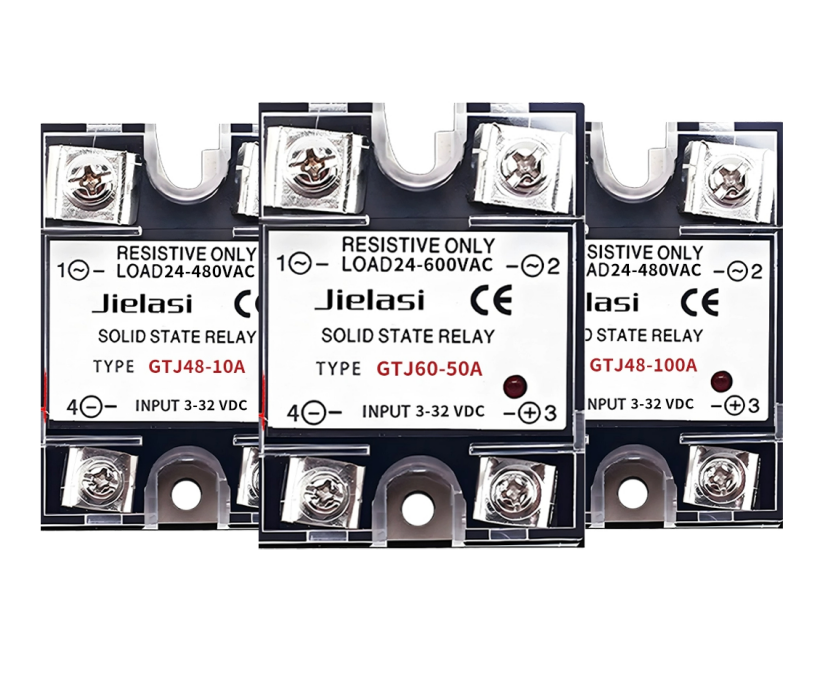
Resistive Loads: The Ideal Match for a Single Solid State Relay
Why resistive loads minimize stress on single solid state relay output semiconductors
When it comes to resistive loads like heating elements and old fashioned incandescent lamps, they actually put very little strain on the semiconductors inside solid state relays (SSRs). These types of loads have what engineers call a near unity power factor, which basically means the voltage and current stay nicely lined up instead of getting out of sync. This alignment prevents those annoying voltage spikes that happen when equipment turns on or off. Since there's no sudden rush of current or stored energy to worry about, the electrical demand stays steady and predictable from a thermal standpoint. That helps protect the delicate semiconductor junctions from repeated heating and cooling cycles that can cause wear over time. An important thing to note is that resistive loads don't throw back any unwanted electricity (known as back-EMF) when turned off, unlike their inductive or capacitive counterparts. This makes life much easier for SSRs because they can operate safely within their normal parameters without needing extra safety margins built into the design.
Zero-crossing switching: How it enhances longevity and EMI performance in resistive applications
When using zero crossing switching, the solid state relay turns on right at the moment when AC voltage crosses zero volts. This careful timing helps avoid sudden jumps in current flow which can cause problems. The result? Less stress from power surges and significantly reduced electromagnetic interference or EMI. Tests show around 40 dB lower EMI levels compared to regular switching methods. Industrial heating systems benefit especially since they generate much less noise that might interfere with other control circuits nearby. Thyristor components waste far less power too, somewhere between 65% and 80% less actually, which means these parts last longer before needing replacement. Another big plus is avoiding contact welding issues that plague mechanical relays after millions of operations each year. For applications requiring repeated switching over many years, zero crossing remains the best choice for controlling resistive loads reliably.
Inductive Loads: Critical Considerations for Single Solid State Relay Reliability
Back-EMF and voltage transients: Primary failure mechanisms in single solid state relay circuits
Inductive loads like solenoids, contactors and various types of motors store energy within their magnetic fields. When these devices get turned off suddenly, they produce sharp back-EMF voltage spikes that can reach over 1,000 volts per microsecond. These spikes cause destructive thermal runaway effects in solid state relay output semiconductors. Compared to simple resistive loads, the sudden release of stored energy creates conditions similar to electrical arcs which speed up the breakdown of semiconductor junctions. Most early failures seen in industrial SSR installations actually come from this exact phenomenon. Things get even worse when there's no natural point where current drops to zero during shutdown, particularly problematic in AC systems since leftover magnetic energy continues circulating after voltage reaches zero level.
Mitigation strategies: Snubber networks, dv/dt-rated SSRs, and random-on switching selection
There are several effective ways to shield a single solid state relay from those pesky inductive threats that can cause all sorts of problems. First off, RC snubber networks work wonders here. Most folks go with around 100 ohm resistors connected to about 0.1 microfarad capacitors. These little setups soak up that sudden burst of energy before it ever gets to the SSR output stage. Another good practice is picking an SSR that handles at least 500 volts per microsecond for dv/dt ratings. This makes sure the internal parts won't fry when faced with those fast voltage spikes. For inductive circuits, switching randomly instead of waiting for zero crossing points helps prevent those nasty resonance issues that build up over time. And don't forget something important many engineers overlook: when dealing with inductive loads, always knock down the SSR current rating by roughly 40 to 50 percent. This extra buffer accounts for those unpredictable startup surges and temporary overload situations that happen more often than we'd like.
Capacitive and Mixed Loads: Managing Inrush Current with Single Solid State Relay Derating
Capacitor charging surge: Why peak current ratings and I²t withstand are decisive for single solid state relay selection
When capacitive loads like input filters in switch mode power supplies start up, they create these huge inrush currents that can spike anywhere from 20 to 40 times higher than normal operating levels. These surges actually present two main problems for solid state relays. First, there's the immediate risk when peak current goes beyond what the device can handle according to its specs. Second comes the longer term issue where thermal stress builds up over time, measured in those I squared t units (amps squared per second). At first, capacitors act almost like short circuits because their resistance is so low right after power on, which puts them at risk of causing damage through things like MOSFET avalanches or even melting the bond wires inside. For anyone selecting components, checking for both these factors becomes absolutely essential in ensuring reliable operation under real world conditions.
- Peak current rating exceeds worst-case inrush amplitude
- I²t withstand value exceeds the total surge energy integral
Derating by 50–60% beyond calculated values is standard practice—not only to accommodate aging-induced increases in capacitor ESR but also because DC-output SSRs lack zero-crossing assistance, making them especially vulnerable to repeated inrush events.
AC vs. DC Load Compatibility: Output Configuration Limits of a Single Solid State Relay
The way AC and DC loads affect a solid state relay's output architecture is pretty different. For AC SSRs, they work best because they can take advantage of those natural current zero points where the waveform crosses zero volts. This lets them switch off power cleanly using components like thyristors or triacs designed specifically for AC signals. But things get tricky with DC loads. These need one-way output devices usually MOSFETs or bipolar transistors that can handle constant current flow and shut down properly even when there's no voltage drop to help with switching. When someone accidentally uses an AC rated SSR for a DC application, bad stuff happens fast. Without those zero crossings, the relay just keeps conducting electricity uncontrollably. That leads to overheating components and eventually destroys the semiconductor parts inside. Getting this right means matching the SSR type exactly with what kind of current it will control. Also important are voltage and current specs that go beyond normal operating conditions with plenty of extra capacity built in. Getting these details wrong doesn't just fry the relay it can bring whole systems to a grinding halt unexpectedly.
Table of Contents
- Resistive Loads: The Ideal Match for a Single Solid State Relay
- Inductive Loads: Critical Considerations for Single Solid State Relay Reliability
- Capacitive and Mixed Loads: Managing Inrush Current with Single Solid State Relay Derating
- AC vs. DC Load Compatibility: Output Configuration Limits of a Single Solid State Relay